Heat recovery (HR), often abbreviated as WRG (Wärmerückgewinnung), refers to processes for reusing thermal energy that is generated in many production facilities and is often not utilized, but instead discharged unused into the atmosphere via recooling systems. In some cases, this involves considerable amounts of heat.
Due to rising energy costs and with the aim of saving primary energy and reducing CO₂ emissions, heat recovery is becoming increasingly important in the industrial sector.
Before detailed planning begins, it is important to clarify the following questions:
-
Is the heat input into the cooling system continuous, or is it subject to fluctuations?
-
What is the temperature level of the heated cooling water?
-
For what purpose is the recovered heat to be used?
-
Is continuous, year-round utilization of the recovered heat possible?
-
What temperatures of the heated medium are preferably required?
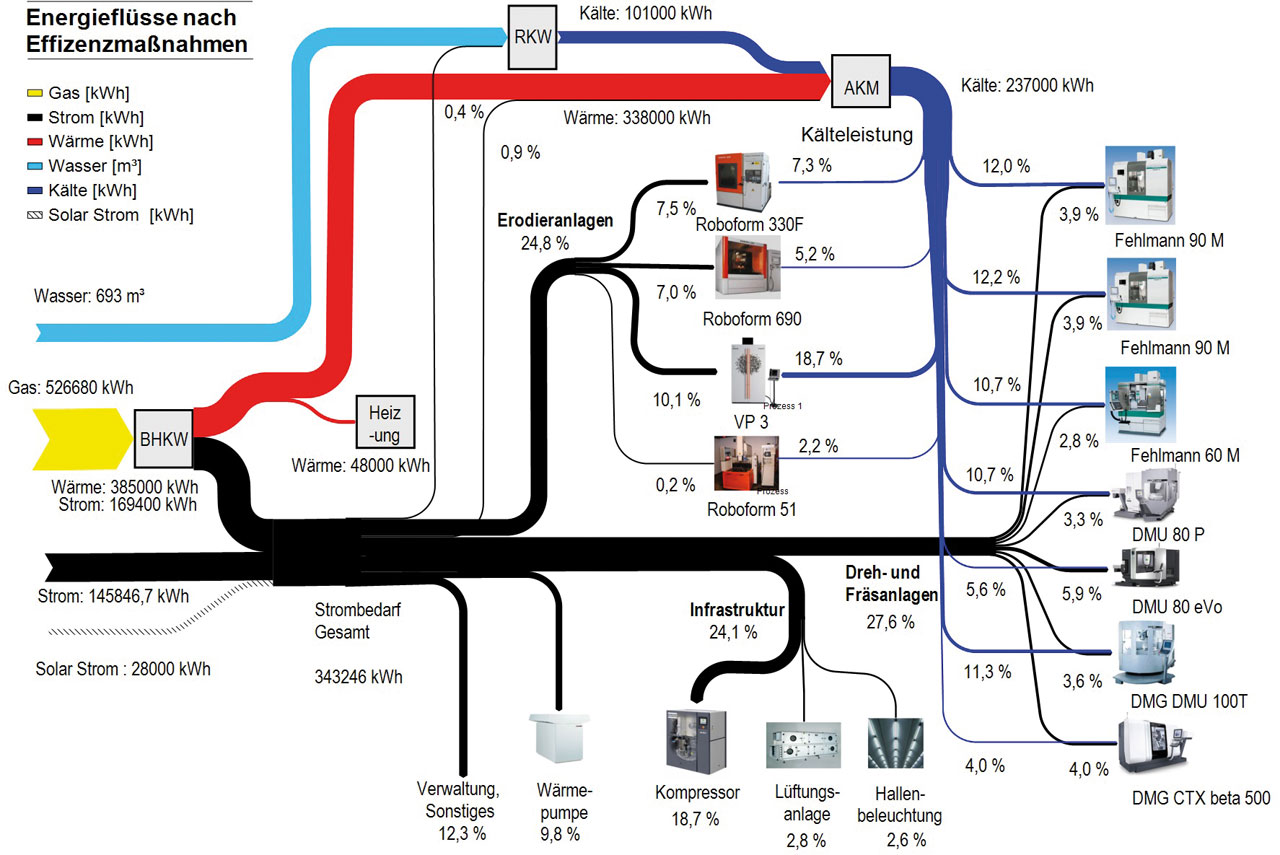
An energy efficiency analysis can be very helpful in this context (see Fig. 2).
Multi Kühlsysteme GmbH offers its customers a range of solutions for heat recovery in the field of process cooling. Key factors include a holistic assessment of media supply systems (heating system, cooling system, compressed air systems) as well as the sensible utilization of the available energy quantities. Involving specialist planners for building services engineering and qualified energy consultants is often beneficial.
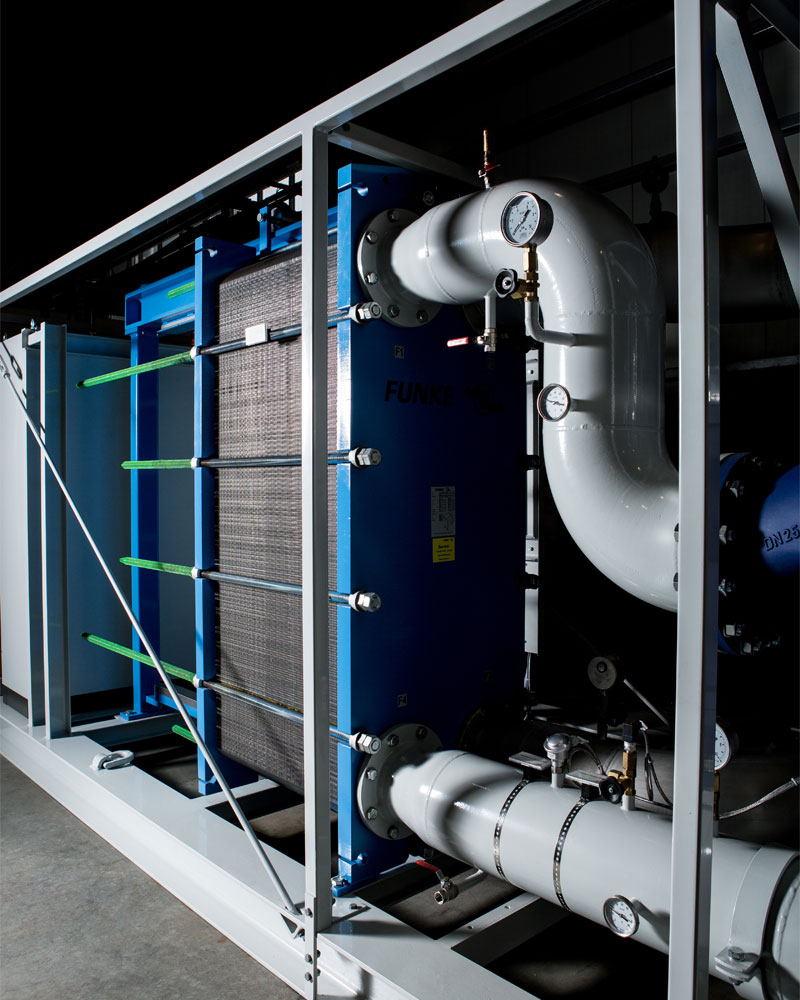
The simplest form of heat recovery is direct heat extraction via heat exchangers. For liquid media (water, hydraulic oils, various emulsions), plate heat exchangers (Fig. 1) are typically used. For gaseous media, such as process exhaust air, air-to-water heat exchangers are generally employed.
The recovered thermal energy can, for example, be used for building heating or for the preheating of various media within production facilities.
In the area of building heating, heat recovery can be applied to underfloor heating systems or to ventilation systems for preheating outdoor air. In these cases, cooling water return temperatures of 35°C to 50°C may be sufficient. For new investments, this can lead to smaller system dimensions and, consequently, cost savings in this area.
For effective utilization and to achieve a high efficiency, the highest possible inlet temperatures into the heat recovery equipment are crucial. This is particularly the case with high return temperatures at the cooling water outlet from furnace cooling systems and hydraulic oil cooling systems, typically ranging from 50°C to 85°C.
If there is a simultaneous demand for chilled water, Multi Kühlsysteme offers modern adsorption refrigeration systems for cooling generation. Using this technology, chilled water can be produced through the utilization of thermal energy. This approach is also particularly interesting in combination with combined heat and power (CHP) systems, such as block-type thermal power stations (CHP units). A very recent development is the utilization of waste heat from so-called compressed air power plants (DHKW).
Indirect heat recovery methods can also represent viable solutions. In this context, Multi Kühlsysteme offers compression heat pumps. The use of these systems is advantageous at relatively low cooling water return temperatures (approximately 35°C to 50°C), as a small input of electrical energy (drive energy) allows cost-effective generation of thermal energy for heating purposes.
When developing and implementing heat recovery concepts, Multi Kühlsysteme works closely with specialized partner companies, ensuring a high level of technical expertise throughout all phases of planning and execution.
The costs and benefits of heat recovery measures can be illustrated using an energy efficiency and cost-effectiveness matrix.
There are also opportunities for financial support through funding programs for heat recovery measures. Multi Kühlsysteme offers advisory services in this area as well.
Additional high-quality information on this topic is provided by the Saxon Energy Agency (SAENA GmbH) in the following publication:
Technologies for Waste Heat Utilization
https://www.saena.de/download/Broschueren/BU_Technologien_der_Abwaermenutzung.pdf