Water analysis

An analysis of the cooling water of a recooling plant is essential for the technically and hygienically impeccable operation of the plants. The chemical-physical and microbiological parameters of cooling water are an important indicator for early detection and prevention of system faults and malfunctions of individual components.

Among other things, the risk of scale precipitating in the system may be estimated by measuring the carbonate hardness (also referred to as water hardness). Suitable measures, such as retrofitting a softening plant or adding a hardness stabiliser, can then be taken to minimise it.

We recommend an annual check of all essential chemical-physical water parameters to ensure the functionality of the recooling plant.

The legislator specifies specific examination intervals for microbiological analyses. More information on the 42. BImSchV (42nd Federal Immission Control Ordinance) can be found here.
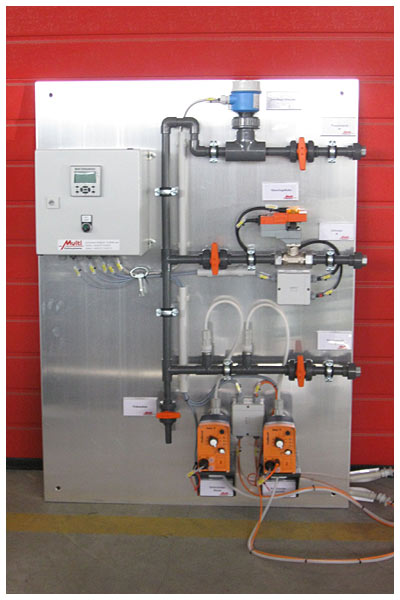
Water-treatment plants and technology

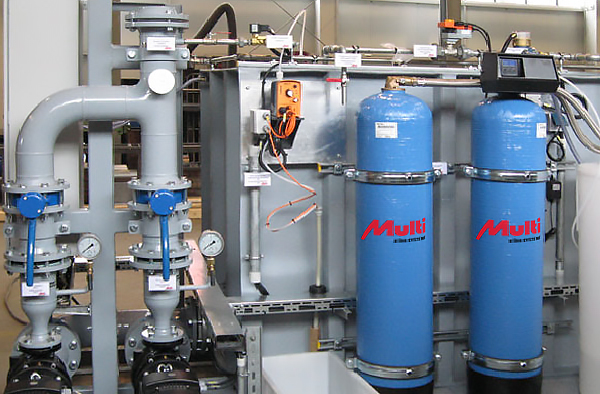
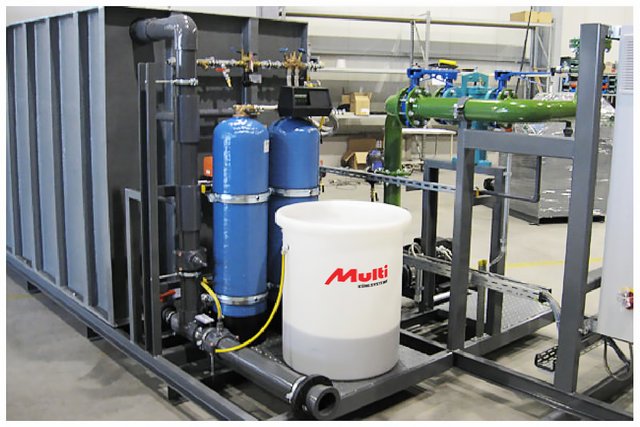
Water-treatment technology is essential for the efficiency of any cooling systems – in particular because the initial qualities of the water fed into the system vary from region to region. In this respect, the first task of water-treatment technology is to analyse the ingredients of the available water in order to be able to introduce appropriate measures to improve the water quality. Chemical characteristics (such as pH value, carbonate content and water hardness) as well as physical properties such as temperature and pressure are determined when inspecting the make-up water.


In addition to the optimised conductivity and cooling capacity of the circuit and make-up water, the process offers the further advantage that it is easy on your cooling system. “Clean” water results in far fewer deposits forming on the pipe walls, which would impair the efficiency of the cooling system - even the growth of biological deposits can be effectively prevented by appropriate water-treatment technology. If necessary, biocides are introduced into the water cycle in a time-controlled manner. Of course, we also deliver the necessary dosing agents from us.
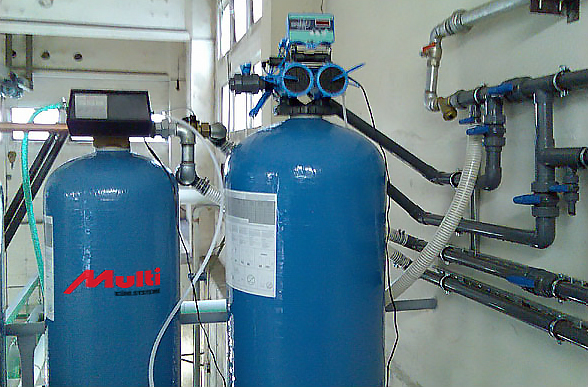
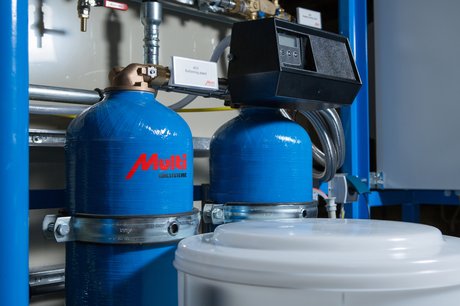
The individual components of the water-treatment technology depend on the initial quality of the existing water. The modular components such as our blending armature, salt dissolving tank or the ion exchanger system function independently of the rest of the cooling system and are mounted individually at a suitable location.


Conductivity-controlled desalination and dosing systems

The conductivity-controlled desalination and dosing systems are gentle on your cooling system and ensure long-term efficiency:

  • For monitoring and treatment of (re-) circulating water
  • Limits according to VDI 3803
  • Avoidance of deposits on pipe walls and other components
  • Reduction of unwanted biological growth in the system
Wasseranalyse

  • Used in all open cooling systems
  • Measurement of conductivity as a measure of the dissolved salts in the water
  • Control of a desalination motorised ball valve for the separation of circuit water and replacement with fresh water for constant conductivity
  • Addition of hardness stabilisers/corrosion inhibitors in proportion to quantity in order to work with as high a thickening as possible
  • Time-controlled addition of biocide to prevent algae formation etc.
  • Locking function to prevent uncontrolled separation of dosing agent
  • Use of approved dosing agents; repurchase possible from MULTI Kühlsysteme (consumables)
Leitfähigkeitsgeregelte Absalz- und Dosieranlagen

  • Delivery as a complete, ready-to-operate plant in wall-mounted design with its own electronic control system (only the contact water meter has to be installed on site)
  • It is also possible to install the complete system in a control cabinet housing for weather-protected outdoor installation (necessary measures for frost protection must be coordinated)

Water is a vital part of the entire cooling system as a cooling medium in cooling water circuits. The available input qualities, requirements based on the type of cooling system and the operating conditions can differ greatly.
The system design (type of circuit, materials used) and the operating parameters (temperatures, pressures), the necessary components of an effective water treatment system must be determined based on an analysis of the ingredients of the available water.
Water treatment includes the control and treatment of make-up water and recirculated water. Essential parameters are pH value, carbonate and total hardness, electrical conductivity, and the number of colony-forming units (cfu).


Softening plants

Conductivity of the water is increased and scale-forming salts are reduced by reducing the water hardness:

  • For treatment of make-up (fresh) water
  • Reduction of the proportion of scale-forming salts through ion exchange
  • Avoidance of deposits on pipe walls and other components by the circulating water
Wasseranalyse

•    Used in all open cooling systems
•    Water analysis forms the basis for product selection
•    Size depends on the amount of make-up water required

  • Components such as the blending armature, salt dissolving tank, ion exchanger system are usually installed individually in the plants at a suitable location; the function is independent of the rest of the cooling system
  • If the installation is made in a drinking water pipe, the installation of a tested system separator is mandatory (if not already present)


Water is a vital part of the entire cooling system as a cooling medium in cooling water circuits. The available input qualities, requirements based on the type of cooling system and the operating conditions can differ greatly.
The system design (type of circuit, materials used) and the operating parameters (temperatures, pressures), the necessary components of an effective water treatment system must be determined based on an analysis of the ingredients of the available water.
Water treatment includes the control and treatment of make-up water and recirculated water. Essential parameters are pH value, carbonate and total hardness, electrical conductivity, and the number of colony-forming units (cfu).


Further water-treatment technology:

What water-treatment technology would be useful for you? Our modular components can be adapted to your operating conditions so that your cooling system can continue to work efficiently in the long term.

  • For the treatment of make-up (fresh) water
  • Reduction of certain water constituents that are unfavourable for the operation of the cooling system
  • For the production of demineralised water
Wasseranalyse

•    Use in all cooling systems or for the production of wetting water when using a hybrid dry cooler
•    Water analysis forms the basis for product selection
•    Size depends on the required water volume
•    Examples of use include reverse osmosis plants, deferrisation plants, demanganisation plant

The components, some of which are pre-assembled in the factory, are usually installed individually in the plants in a suitable location; their function is independent of the rest of the cooling system.


Water is a vital part of the entire cooling system as a cooling medium in cooling water circuits. The available input qualities, requirements based on the type of cooling system and the operating conditions can differ greatly.
The system design (type of circuit, materials used) and the operating parameters (temperatures, pressures), the necessary components of an effective water treatment system must be determined based on an analysis of the ingredients of the available water.
Water treatment includes the control and treatment of make-up water and recirculated water. Essential parameters are pH value, carbonate and total hardness, electrical conductivity, and the number of colony-forming units (cfu).


Are you interested in water-treatment technology and would like some consulting? Contact us here!


MULTI Kühlsysteme is a leading supplier of process cooling in the industrial sector.

Glass industry

The production of glass is only possible through heat, no matter if it is about single-pane safety glass, laminated safety glass, or other types of glass. However, the change from liquid to solid can only take place through active cooling.

Metalworking industry

Heat is generated everywhere and must be dissipated, no matter if one is drawing wire, rolling profiles, or casting castings. We help our customers to manufacture cost-effectively with our engineering and plant construction services.

Furnace manufacturers/autoclaves

Two things are needed in the production of composites – pressure and heat. MULTI Kühlsysteme supplies customer-optimised cooling systems for industrial furnaces and autoclaves as a competent and long-standing partner in plant engineering.

Chemical industry

Chemical processes are usually strongly dependent on temperature. Active cooling is essential for the stable course of chemical reactions to ensure a constant process temperature.

Solar industry

Heat is released when wafers (components for solar panels) are produced. We rely on heat exchanger systems in order to dissipate this heat cost-effectively and to avoid contamination of the process water.

Foam & plastics manufacturer

Process heat has to be dissipated everywhere, be it in foam for upholstered furniture, moulded polystyrene parts for the automotive industry, or plastic packaging. We create process reliability and actively contribute to the high quality of the end products.

Get the system of your dreams this easily

The right cooling system will save time, money, and nerves for you. We will help you find the optimal solution for your plant.


Get in Touch

Our motto: Everything from a single source

MULTI Kühlsysteme is your one-stop shop for taking inventory, overall planning, technical processing, manufacture, assembly, control with programming, commissioning, and after-sales service from delivery of individual components to the implementation of complete projects.

REMONDIS

Grade: 1.1

03/2024

FEM Freiberger Eurometall

Grade: 2.0

03/2024

Tridelta Weichferrite GmbH

Grade: 2.0

03/2024

Renk

Grade: 1.7

03/2024

Technische Universität Dresden

Grade: 1.0

02/2024

Märkische Faser GmbH

Grade: 1.2

01/2024

Interpane Österreich

Grade: 1.0

01/2024

Trimet

Grade: 1.0

01/2024

Flanschenwerk Bebitz GmbH

Grade: 1.0

12/2023

Saint-Gobain Glass Flachglas Torgau GmbH

Grade: 1.1

12/2023

Snop Automotive GmbH

Grade: 1.0

11/2023

Gießerei Lößnitz

Grade: 1.0

11/2023

Ciech

Grade: 1.0

11/2023

Ohlro Hartschaum

Grade: 1.7

11/2023

Ronal

Grade: 1.0

10/2023

Schaumaplast

Grade: 1.4

10/2023

CSP Hünxe

Grade: 1.2

10/2023

RENK

Grade: 1.0

09/2023

Snop Group

Grade: 1.0

09/2023

ESF Elbe Stahlwerke

Grade: 1.0

09/2023

G+M Vacutherm GmbH

Grade: 1.0

09/2023

MGG Herzogenburg

Grade: 1.0

08/2023

Rhegla GmbH

Grade: 1.4

08/2023

Bahntechnik Brand-Erbisdorf

Grade: 1.0

07/2023

Feintool Oelsnitz

Grade: 1.0

07/2023

QSIL

Grade: 1.0

06/2023

Leuna Harze

Grade: 1.2

06/2023

GKN Driveline

Grade: 1.4

06/2023

Schmidt Automotive

Grade: 1.0

06/2023

Cellpack Radeberg

Grade: 1.0

06/2023

Bell Flavors

Grade: 1.1

06/2023

Lydall Gutsche GmbH @ Co. KG

Grade: 1.0

06/2023

H&W Arnstadt

Grade: 1.1

05/2023

BHARAT FORGE Aluminiumtechnik

Grade: 1.0

05/2023

Danfoss Solution / Eaton

Grade: 1.1

05/2023

ZWP Zahnradwerk Pritzwalk GmbH

Grade: 1.1

05/2023

Flachglas Torgau GmbH

Grade: 1.0

05/2023

Danpower

Grade: 1.1

04/2023

FEM Freiberg

Grade: 1.2

04/2023

Gothaplast Verbandpflasterfabrik GmbH

Grade: 1.5

03/2023

Tridelta Weichferrite GmbH

Grade: 1.0

03/2023

Schaumaplast Nossen

Grade: 1.0

03/2023

CIECH Soda Deutschland

Grade: 1.2

03/2023

Flender Industriegetriebe GmbH

Grade: 1.0

02/2023

Hitachi Zosen Inova Biomethan GmbH

Grade: 1.0

01/2023

Bosch Rexroth

Grade: 1.4

01/2023

Interpane

Grade: 1.0

01/2023

Air Liquide GmbH

Grade: 1.2

12/2022

Winning Plastics

Grade: 1.2

12/2022

EURO-COMPOSITES® S.A.

Grade: 1.4

11/2022

BASF Schwarzheide

Grade: 1.0

11/2022

Flanschenwerk Bebitz GmbH

Grade: 2.3

11/2022

Georg Fischer Casting Solution

Grade: 1.1

11/2022

QSIL SE

Grade: 1.0

10/2022

Bosch Rexroth

Grade: 1.0

10/2022

Engl-Glas

Grade: 1.0

10/2022

Nabertherm GmbH

Grade: 1.3

09/2022

G&M VACUTHERM

Grade: 1.3

09/2022

Flender Industriegetriebe GmbH

Grade: 1.1

08/2022

MGG Herzogenburg

Grade: 1.0

08/2022

Parker Hannifin

Grade: 2.0

08/2022

Avient Colorants

Grade: 1.0

07/2022

PQ Corporation GmbH

Grade: 1.0

07/2022

HK Präzisionsteile

Grade: 1.4

07/2022

Herbrig und Co. GmbH

Grade: 1.0

07/2022

Magna Powertrain

Grade: 2.0

06/2022

Feintool System Parts Most s.r.o

Grade: 1.1

06/2022

Auerhammer Metallwerk

Grade: 1.6

06/2022

Eaton Germany GmbH

Grade: 1.3

06/2022

DLB Oberviechtach

Grade: 1.0

05/2022

Renk AG Augsburg

Grade: 1.0

04/2022

CIECH Soda Deutschland

Grade: 1.0

03/2022

Saint Gobain

Grade: 1.0

01/2022

Thyssenkrupp

Grade: 1.2

01/2022

Interpane AG

Grade: 1.0

01/2022

Kurtz Ersa

Grade: 1.2

01/2022

Interpane AG

Grade: 1.0

01/2022

G&M VACUTHERM

Grade: 1.0

12/2021

Pino Automotive

Grade: 1.1

12/2021

Zschimmer und Schwarz

Grade: 1.1

12/2021

Raesch Quartz GmbH

Grade: 1.0

12/2021

FVH Folienveredelung GmbH

Grade: 1.0

12/2021

OHLRO Hartschaum GmbH

Grade: 1.0

11/2021

Caleoglas Berlin

Grade: 1.6

11/2021

Jenoptik

Grade: 1.0

11/2021

BASF Schwarzheide

Grade: 1.0

10/2021

Gottlieb Binder GmbH & Co. KG

Grade: 1.3

10/2021

ESF Riesa

Grade: 1.0

10/2021

Air Liquide Deutschland GmbH

Grade: 1.2

10/2021

EURO-COMPOSITES® S.A.

Grade: 1.0

09/2021

LMG Manufacturing GmbH

Grade: 1.0

09/2021

schwartz GmbH

Grade: 1.5

09/2021

Flender Industriegetriebe GmbH

Grade: 1.0

09/2021

Härtewerk Chemnitz

Grade: 1.0

09/2021

Nabertherm GmbH

Grade: 1.0

09/2021

Parker Hannifin

Grade: 1.3

08/2021

TechnoGuss GmbH

Grade: 1.0

08/2021

Flender Industriegetriebe GmbH

Grade: 1.3

08/2021

SMK Oberflächenveredelung

Grade: 1.0

07/2021

Bell Flavors Leipzig

Grade: 1.0

06/2021

Ilsenburger Grobblech GmbH

Grade: 1.1

06/2021

Feuer Powertrain GmbH & Co.KG

Grade: 1.0

06/2021

Pino Automotive

Grade: 1.0

06/2021

Ronal Technologie GmbH

Grade: 1.1

06/2021

Leuna Harze

Grade: 1.4

06/2021

H+W Arnstadt GmbH

Grade: 1.2

06/2021

Laborchemie Apolda

Grade: 1.7

06/2021

FEM Freiberg

Grade: 1.2

06/2021

Cellpack Radeberg

Grade: 1.0

06/2021

Track Tec Coswig

Grade: 1.2

05/2021

CIECH S.A.

Grade: 1.0

05/2021

DB Netz AG - Schwandorf

Grade: 2.0

05/2021

Feintool System Parts Oelsnitz GmbH

Grade: 1.0

05/2021

G. Siempelkamp GmbH & Co. KG

Grade: 2.1

05/2021

Raesch Quartz GmbH

Grade: 1.0

05/2021

Group Schuhmacher

Grade: 1.5

04/2021

Gießerei Lößnitz

Grade: 1.0

03/2021

CI Composite Impulse GmbH & Co.

Grade: 1.1

02/2021

Leviat

Grade: 1.0

01/2021

ESKA Automotive GmbH

Grade: 1.1

01/2021

DLB Oberviechtach

Grade: 1.1

11/2020

Carbon Super Parts

Grade: 1.2

11/2020

Carbon Super Parts

Grade: 1.0

11/2020

Renk AG Augsburg

Grade: 1.0

10/2020

Zschimmer und Schwarz

Grade: 1.1

09/2020

ENGL - GLAS Ges.m.b.H.

Grade: 1.0

09/2020

Linde Engineering

Grade: 1.1

08/2020

G&M VACUTHERM

Grade: 1.0

08/2020

Biogasanlage Bad Köstritz

Grade: 1.0

08/2020

FVH Folienveredelung GmbH

Grade: 1.1

08/2020

BASF Schwarzheide

Grade: 1.0

08/2020

Härtewerk Chemnitz

Grade: 1.3

08/2020

SMK Oberflächenveredelung

Grade: 1.0

07/2020

Auerhammer Metallwerk

Grade: 1.0

07/2020

KBE Elektrotechnik GmbH

Grade: 1.3

07/2020

Flachglas Torgau GmbH

Grade: 1.2

06/2020

IMA Dresden

Grade: 1.1

01/2020

Bosch Rexroth

Grade: 1.3

05/2019

To customer reviews